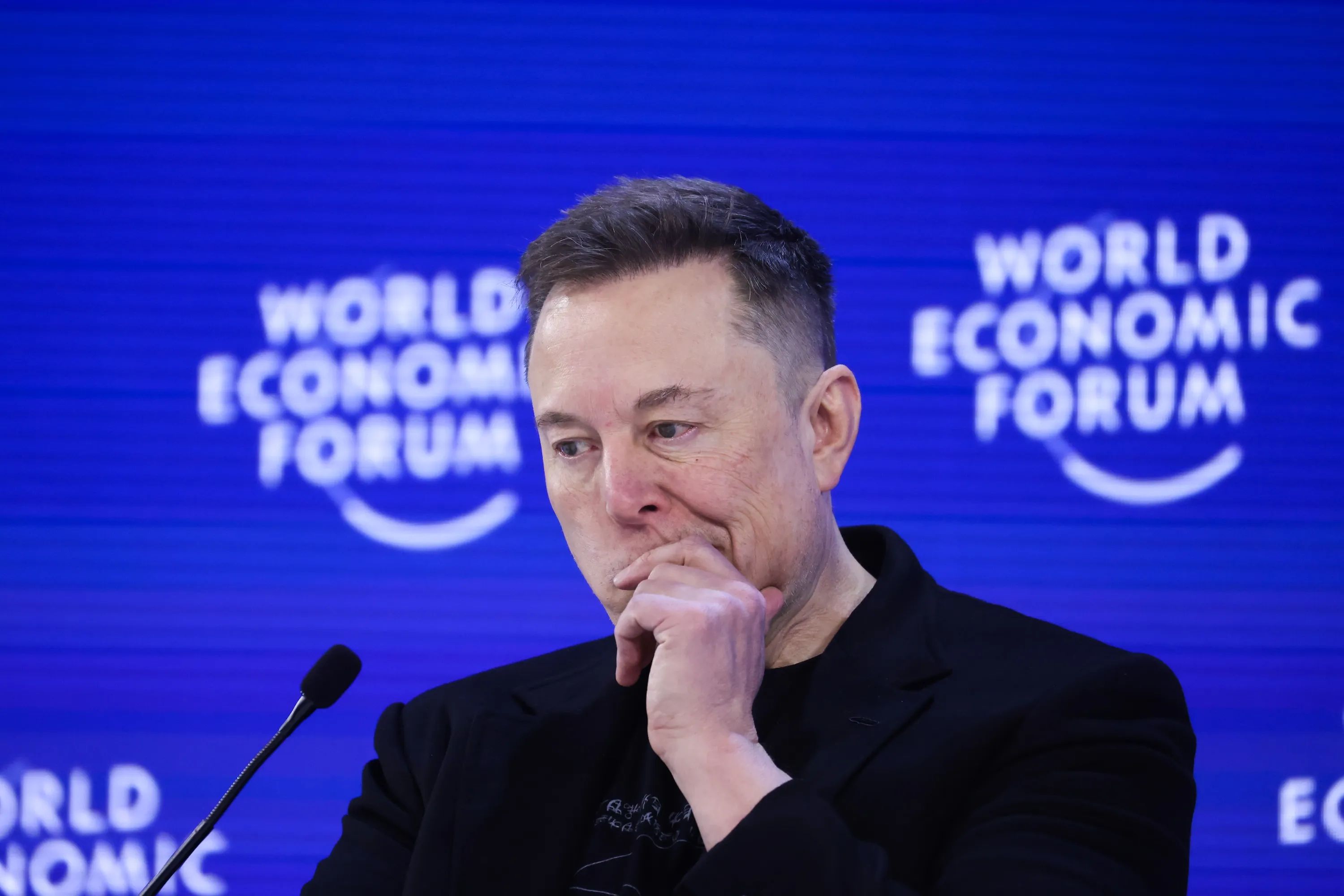

The "hardcore" culture of Elon Musk’s ventures has officially collided with the hyper-competitive reality of the AI arms race. Three years into its mission to "understand the universe," xAI is undergoing a brutal structural and personnel overhaul. Of the 11 original co-founders who launched the deep learning lab alongside Musk, only two—Manuel Kroiss and Ross Nordeen—remain.
Elon Musk candidly admitted on X (formerly Twitter) this Thursday that the current iteration of the company was flawed from the start. "xAI was not built right first time around, so is being rebuilt from the foundations up," he stated.
The Coding Crisis and the Departure of Co-Founders
The immediate catalyst for the current "re-foundationing" appears to be a lag in engineering performance. This week, co-founders Zihang Dai and Guodong Zhang exited the company following internal friction regarding xAI’s coding capabilities. Musk reportedly complained that Grok’s programming tools were failing to compete with Claude Code (Anthropic) and Codex (OpenAI).
In the AI sector, coding assistants are the primary revenue generators. While Grok initially gained notoriety for its "lax" guardrails and ability to generate controversial imagery, the enterprise dollars are in "Agentic Coding." Musk held an all-hands meeting on Wednesday focused exclusively on catching up to rivals by mid-2026.
Executive Parachutes and Re-Hiring Campaigns
To steady the ship, Musk is leveraging his broader empire. Reports indicate that top executives from SpaceX and Tesla have "parachuted" into xAI to evaluate the current 5,000-person workforce and purge underperformers.
Simultaneously, Musk is casting a desperate net for new talent. In a rare admission of administrative failure, he and colleague Baris Akis are personally reviewing previously rejected employment applications. "My apologies," Musk posted, addressing the pool of candidates the company had previously ghosted.
Despite the turmoil, the lab still holds gravitational pull. Andrew Milich and Jason Ginsberg, former product engineering leads at Cursor, have recently joined xAI. Their move suggests that for top-tier engineers, direct access to frontier models and massive compute clusters—xAI’s strongest assets—remains more alluring than building on top of third-party APIs.
Macrohard and the Tesla Integration
Beyond coding tools, Musk’s long-term play is "Project Macrohard"—a name he insists is a "funny reference to Microsoft." The goal is to create an AI agent capable of executing any task a white-collar worker can perform on a computer.
While the project was reportedly on pause following the quick departure of lead Toby Pohlen, Musk revealed a new strategic pivot: Macrohard is now a joint venture with Tesla.
The "Brain": xAI’s language models will serve as the cognitive engine.
The "Digital Proxy": Tesla is developing a complementary agent dubbed "Digital Optimus" (a nod to the Optimus humanoid robot).
This vision for a "digital proxy" mirrors efforts by Perplexity’s "Everything is Computer" and OpenAI’s recent hire of Peter Steinberger to lead personal agent development.
Ardent Lens Take
Elon Musk’s "tear it down and rebuild" approach is a familiar play from the SpaceX and Twitter (X) handbooks, but the AI landscape is far less forgiving than social media or aerospace. In the rocket business, Musk had the luxury of being the only major player in town for years; in AI, he is sprinting against Anthropic, OpenAI, and Google, all of whom have more stable leadership and deeper enterprise roots.
From the Ardent Lens perspective, the "Macrohard" collaboration with Tesla is the most significant development here. By linking Grok’s intelligence with a "Digital Optimus" agent, Musk is attempting to create a unified OS for both the digital and physical worlds. However, the constant "rebuilding" of foundations carries a high cost: Technical Debt and Talent Fatigue. If xAI cannot stabilize its leadership by the time SpaceX hits the public markets, Grok risks becoming a "vibe-driven" distraction rather than the analytical titan Musk promised. The middle of 2026 will be the "Go/No-Go" moment for Grok’s coding credibility.