
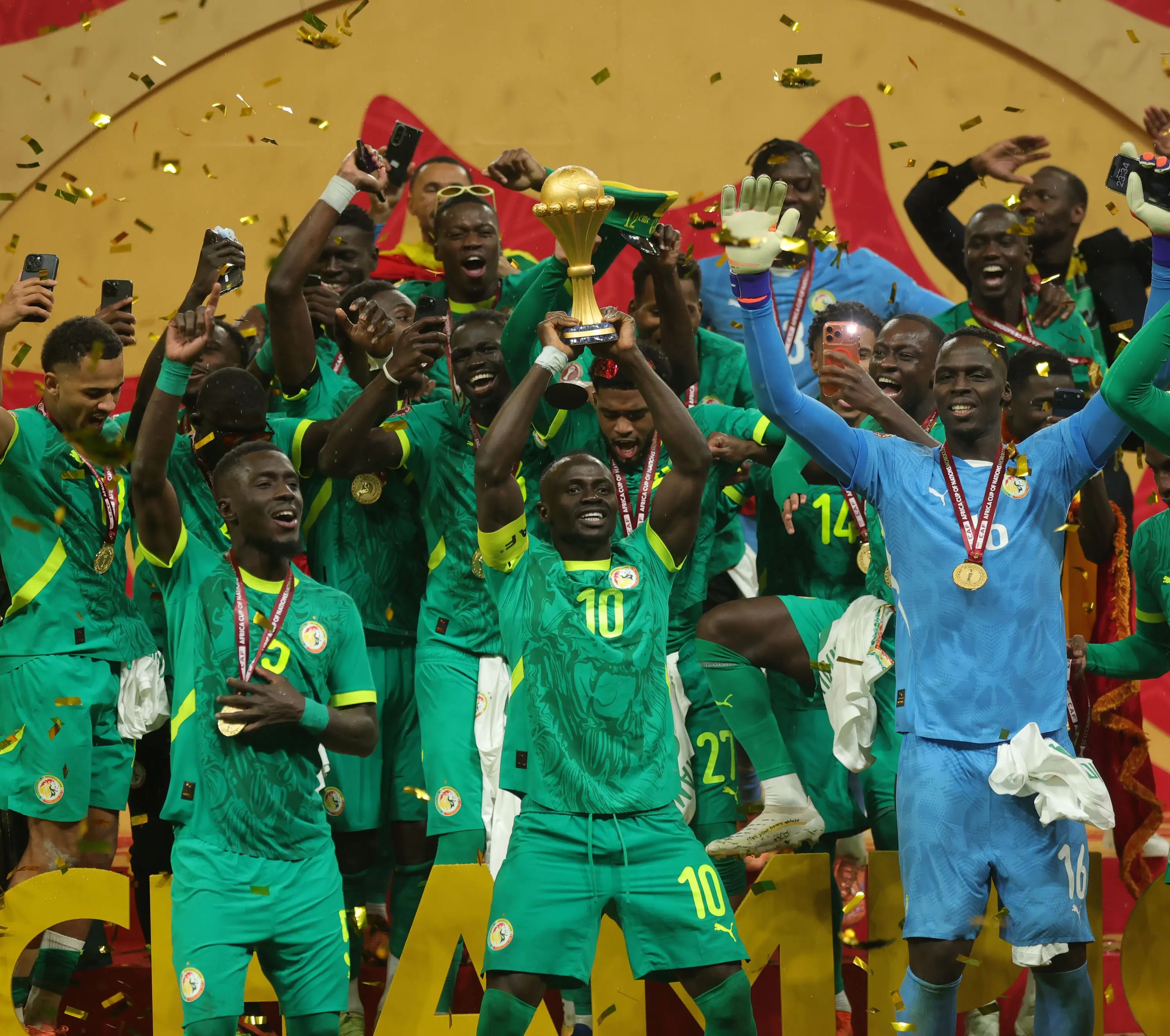

In a landmark decision that has sent shockwaves through the global football community, the CAF Appeal Board has officially stripped Senegal of its 2025 Africa Cup of Nations (AFCON) title, awarding a retrospective 3–0 forfeit victory to the host nation, Morocco. The ruling, delivered on March 17, 2026, exactly two months after the final was played cites a fundamental breach of tournament regulations during the match's chaotic closing stages.
The Incidents of January 18
The controversy stems from the final held at the Prince Moulay Abdellah Stadium in Rabat. During the 98th minute of a deadlocked match, referee Jean-Jacques Ndala awarded a controversial penalty to Morocco following a VAR review. In protest, the Senegalese bench, led by head coach Pape Thiaw, instructed the players to leave the pitch.
The match was halted for approximately 16 minutes before the Senegalese squad returned to the field. Although Morocco’s Brahim Díaz subsequently missed the penalty and Senegal went on to win 1–0 in extra time via a Pape Gueye strike, the CAF Appeal Board has ruled that the initial walk-off constituted a formal "refusal to play."
Legal Basis for the Forfeit
The Appeal Board’s decision rests on a strict interpretation of Articles 82 and 84 of the AFCON Regulations:
Article 82: Specifies that if a team "refuses to play or leaves the ground before the regular end of the match without the authorization of the referee," they shall be considered the loser and eliminated.
Article 84: Mandates that a team contravening Article 82 "shall be eliminated for good from the competition" and "will lose its match by 3–0."
The ruling effectively sets aside the January 28 decision by the CAF Disciplinary Board, which had allowed the 1–0 result to stand while imposing heavy fines and a five-match ban on Coach Pape Thiaw.
Revised Sanctions and Fines
In addition to the match reversal, the Appeal Board modified several individual and organizational penalties:
Ismaël Saibari (Morocco): His $100,000 fine was completely rescinded, and his suspension was reduced to two matches (one suspended).
FRMF (Morocco): Fines for ball-boy misconduct and the use of lasers by supporters were reduced to $50,000 and $10,000, respectively. However, the $100,000 fine for VAR area interference was upheld.
FSF (Senegal): While the team loses the trophy, they remain liable for earlier fines exceeding $600,000 for supporter misconduct and "unsporting behavior" by staff.
Ardent Analysis: The Bureaucratic Assassination of African Football
The CAF Appeal Board’s decision to award the AFCON 2025 title to Morocco in a boardroom sixty days after the final whistle is a catastrophic failure of governance that threatens the very legitimacy of African football. By choosing a hyper-legalistic interpretation of a "temporary" protest over the organic result achieved on the grass, CAF has effectively declared that the lawyers in Cairo are more powerful than the athletes in Rabat.
The 60-Day Silence: A Dereliction of Duty
The most damning aspect of this saga is the timeline. The final took place on January 18. The world moved on; jerseys were sold with "Two-Star" Senegal crests, and the "Reset Agenda" of African football was touted as a success. To wait until March 17 to announce a reversal of this magnitude is a calculated bureaucratic ambush.
In modern sports, finality is the product. When you allow a title to remain "under review" for 16% of a calendar year, you destroy the commercial and emotional value of the tournament. Imagine a scenario where a World Cup winner is stripped of the title two months later because of a 16-minute VAR protest. The global outcry would be immediate; in Africa, it is being presented as "procedural adherence."
Host Nation Bias and the Optical Nightmare
The optics of this decision are disastrous. The tournament was hosted in Morocco. The appeal was lodged by the Moroccan Federation (FRMF). The result? The visitor (Senegal) loses the trophy on a technicality, while the host’s various fines for lasers, ball boy interference, and player misconduct—are slashed or set aside.
The Numbers: A Rigged Disciplinary Scale?
The "Facts and Figures" of the Appeal Board’s ruling reveal a staggering disparity in how justice was dispensed. Consider the financial "reset" provided to the host nation:
Morocco’s Fine Reductions: The host federation saw their laser fine slashed by 33% and their player’s (Saibari) $100,000 fine erased entirely.
Senegal’s Execution: While Morocco received financial leniency for organized "sabotage" (ball boys snatching Edouard Mendy's towel and laser interference), Senegal received the "Death Penalty" of football law: Article 84.
CAF’s decision to use the "Nuclear Option" for a protest that did not even result in an abandoned match—the game was completed and won on the pitch is unprecedented. The 16-minute delay was shorter than many VAR checks in the English Premier League, yet it was leveraged to vacate a continental championship.
The "Esperance 2019" Precedent Reborn
We have seen this movie before, and it always ends in the courtroom. In the 2019 CAF Champions League Final, Wydad Casablanca walked off against Esperance de Tunis due to a VAR failure. CAF initially ordered a replay, but the Court of Arbitration for Sport (CAS) eventually had to intervene.
By awarding the 3-0 win to Morocco now, CAF is inviting a massive legal battle at CAS. The "Facts" are that the referee did not blow the final whistle when Senegal walked off; he waited, the players returned, and the match reached its natural conclusion. By retroactively applying Article 84, the Appeal Board is acting as a "Super-Referee," overriding the official match report that allowed the game to proceed.
The Disastrous Global Impact
This ruling tells every African federation that the host nation enjoys a level of protection that transcends the rules of the game. It tells sponsors that their "champions" are subject to change based on the political weight of an appeal. Most dangerously, it tells the players that their sweat, blood, and extra-time heroics mean nothing compared to a perfectly drafted legal brief.
CAF has not "saved" the integrity of the game; they have assassinated it in a room full of paperwork. They have traded a 1-0 sporting triumph for a 3-0 administrative lie, and in doing so, they have made the AFCON trophy a symbol of bureaucratic whim rather than African excellence.