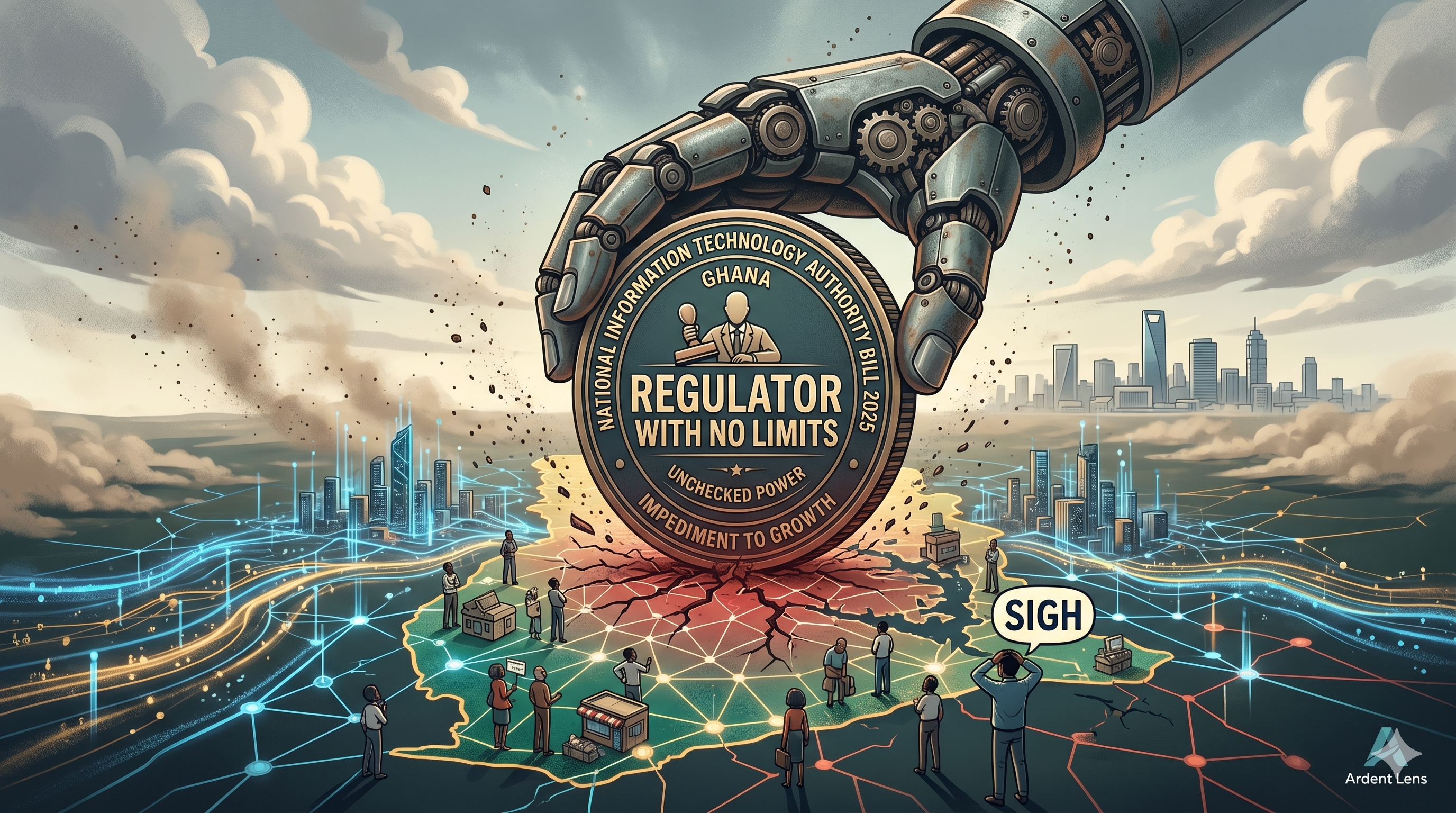
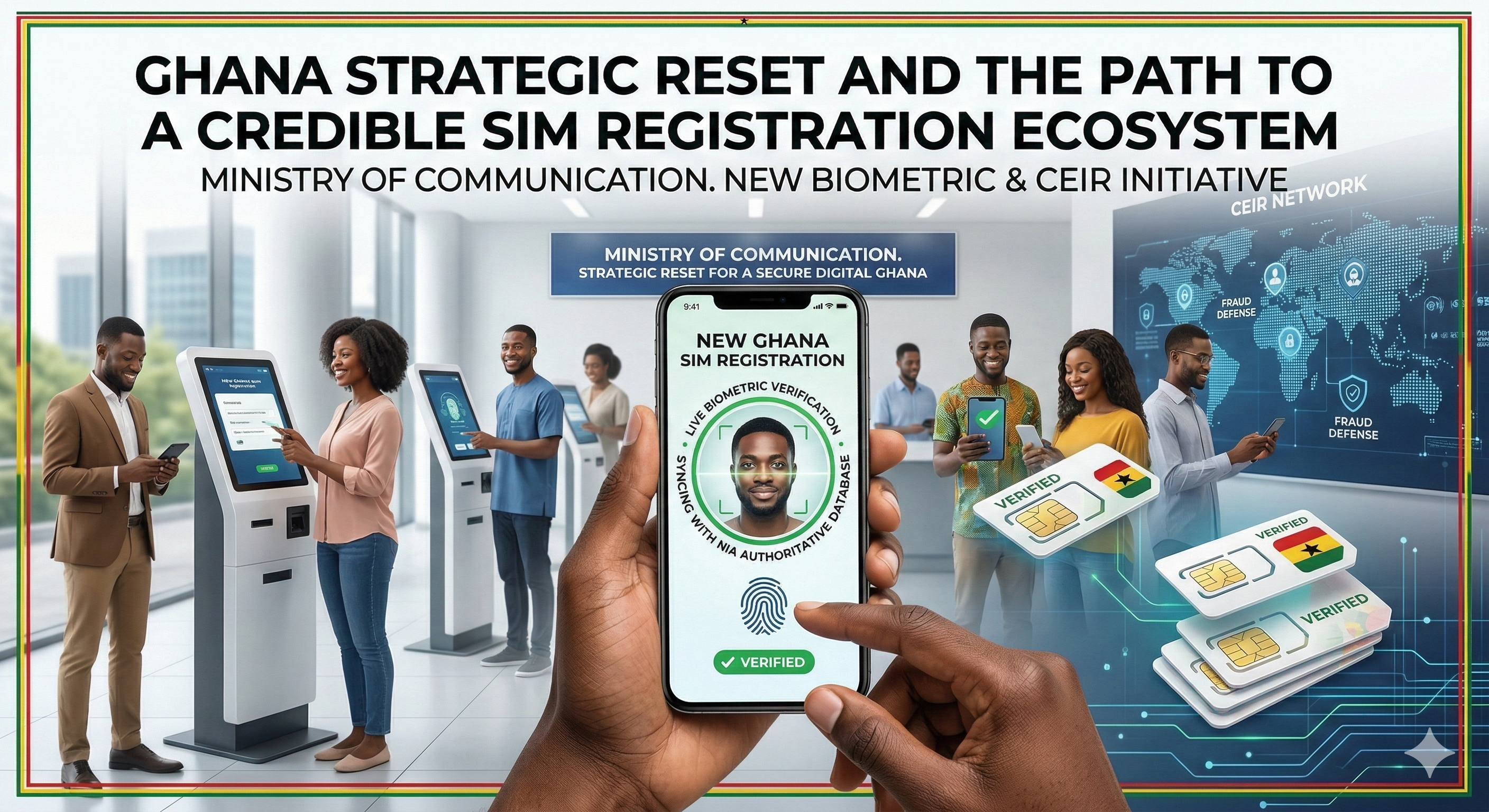

The Ministry of Communication, Digital Technology, and Innovation has officially signaled a complete "reset" of the national subscriber identity framework. The government unveiled a fresh nationwide SIM registration exercise, an ambitious move designed to finally bridge the credibility gap that has plagued the telecommunications sector for years. This is not merely an extension of the previous exercise but a wholesale technical overhaul aimed at restoring trust in Ghana’s digital infrastructure.
The Anatomy of a Technical Failure 2021 to 2024
To understand why a new exercise is necessary, we must look at the staggering data from the 2021-2023 post-mortem. Despite the disconnection of nearly 9 million SIM cards and the freezing of over GHS 200 million in mobile money wallets, a recent audit by the National Communications Authority (NCA) revealed that the core objective of the exercise was never achieved.
The "Zero Match" Revelation In June 2025, a pilot audit of 2 million registration records was conducted. The results were statistically shocking:
Fingerprint Matches: There was a 0% match rate when cross-referenced with the National Identification Authority (NIA) database.
Facial Recognition: While 81.1% of facial captures matched the Ghana Card photos, approximately 18.9% failed, representing hundreds of thousands of potentially fraudulent identities.
Liveness Gaps: The previous system lacked a "liveness check," meaning agents could register SIMs using photocopies or digital photos of a Ghana Card without the actual owner being present.
The Technical Disconnect
The primary reason for the fingerprint failure was an institutional and hardware mismatch. The NIA database uses contact-based biometric capture (where the finger is pressed against a glass scanner), while the mobile registration app used contactless capture (using a phone camera). The two sets of data were fundamentally incompatible, rendering millions of captured fingerprints useless for actual verification.
The High Stakes of Mobile Money Fraud
The urgency for a "clean" database is driven by the explosive growth of the mobile economy and the corresponding rise in sophisticated crime.
Transaction Volume: As of October 2024, the total value of mobile money transactions in Ghana reached a staggering GHS 2.36 trillion, a 55% increase from the previous year.
The Fraud Incentive: In just one quarter of 2025 (June to August), the banking and payment sector recorded over GHS 1.1 million in mobile and e-money fraud exposures.
The "Dirty" SIM Problem: Criminals have exploited the previous system’s flaws by using "pre-registered" SIMs. These are cards linked to unsuspecting citizens' Ghana Cards by rogue agents, making the actual perpetrator untraceable during a fraudulent transfer.
The 2026 Roadmap What Makes This Different
The new 2026 directive, led by the Ministry, introduces three critical pillars to ensure this is the final SIM registration exercise in Ghana’s history.
Feature | Previous System (2021-2023) | New System (2026) |
|---|---|---|
Biometric Verification | Captured but never cross-verified with NIA | Mandatory live verification against NIA in real-time |
Liveness Detection | None (Static photos allowed) | Active Liveness Check required during facial capture |
Device Integrity | Limited tracking | Integration with Central Equipment Identity Register (CEIR) |
User Experience | Mass queues and rigid deadlines | Self-service digital portals and no "unreachable" deadlines |
A key addition to this phase is the Central Equipment Identity Register (CEIR). This system will link the verified subscriber identity not just to the SIM, but to the IMEI of the mobile device. This allows for the cross-network blocking of stolen or fraud-linked handsets, effectively turning a "blacklisted" phone into a useless brick across all Ghanaian networks.
Ardent Lens Take
As someone deeply embedded in the tech space, I see this as a painful but necessary admission of technical debt. We built the 2021 system on a "decoupled architecture" that was too decoupled; the NCA’s registration app was essentially a standalone bucket that didn't have a real-time handshake with the NIA’s "source of truth."
The revelation of zero fingerprint matches is a wake-up call for every software architect in Ghana. It proves that capturing data is meaningless if you aren't validating it against an authoritative schema at the point of ingestion. The introduction of live biometric APIs and the CEIR framework is a massive win. It moves us away from "vibe-based security" toward a zero-trust architecture. However, the government must ensure that the "self-service portals" are robust enough to handle the concurrent load of 30 million subscribers, or we will simply trade physical queues for server timeouts. We are finally building the system we should have had in 2021. Let's hope the integration is as seamless as the promise.